
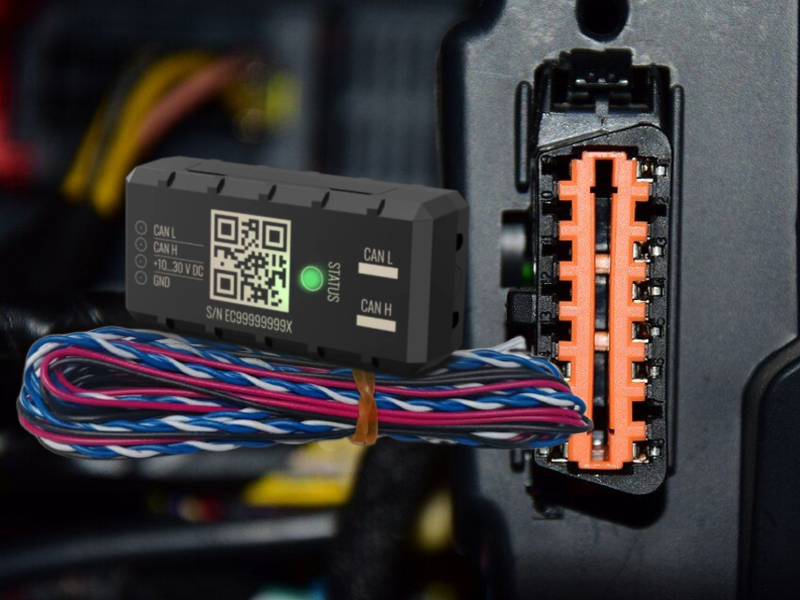
While the OBD-II port (specifically pins 6 and 14) is connected to the vehicle’s CAN bus, it often acts as a filtered gateway designed only for emissions-related diagnostics.
Key Differences between OBD and Raw CAN lines
- Filtered Data (OBD Port): Modern vehicles often use a gateway module to restrict access to the OBD port. This means the port only provides mandatory diagnostic information (PIDs, DTCs) required by law, such as engine RPM, speed, and emissions data.
- Raw Data (Direct Access): Connecting to other points (e.g., behind the dashboard, direct to powertrain CAN, or by tapping into specific module wiring) often provides “raw” traffic. This includes sensitive data like steering angle, brake pressure, or infotainment commands that are blocked from the OBD port.
Why They Differ
- Gateways & Security: To protect critical systems from hackers (e.g., via a compromised OBD device), manufacturers use security gateways that limit the OBD port’s access to the wider network.
- Multiple CAN Buses: Modern vehicles have several distinct CAN networks (Powertrain, Body, Infotainment, Convenience). The OBD port usually connects only to the powertrain network.
- Filtered vs. Broadcasted Traffic: Some manufacturers (e.g., Ford,Tesla) may allow more data to be broadcast to the OBD port than others, but it is rarely the full network traffic.
In summary, if you only require basic CAN information such as PID and DTC codes along with real fuel and odometer data, any OBD connected device will be fine but if you require more detailed data, connection to the CAN lines directly will be the only option.